Gardening Barnes: Recycling and Sustainability
 Gardening Barnes is committed to creating an eco-friendly waste disposal area that supports local communities and preserves urban green spaces. Our approach to a sustainable rubbish gardening area blends practical on-site waste sorting with community partnerships, aiming to reduce landfill, improve soil health, and support reuse projects. This page outlines our targets, local resources, and the low-carbon measures we are putting in place.
Our Recycling Targets and Principles
We have set a clear recycling percentage target: 65% diversion from landfill within three years across all Gardening Barnes operations. That target includes composting green waste, segregating recyclable plastics and metals, and recovering timber and ceramics for reuse. By tracking diversion rates per site, our sustainable waste management and eco-friendly rubbish services will move us steadily toward an even higher long-term goal.
 Our working model reflects boroughs' approach to waste separation: clear labelling for organics, dry recycling, mixed residual waste, and special streams for soil, rubble, and treated timber. We promote household-style separation on site to make the transition seamless for volunteers and crews and to align with local authority policies on kerbside and communal recycling.
We prioritise the creation of a dedicated sustainable rubbish gardening area at each major site: sheltered bays for sorted materials, covered composting loops for green waste, and secure skips for reusable salvage. This is not just a storage area; it is a small-scale circular hub where materials are prepared for transfer to processing or repurposing partners. Effective staging reduces contamination and ensures higher quality recycling streams.
Local Transfer Stations and Waste Routes
Gardening Barnes coordinates with several nearby transfer stations and civic amenity points, enabling streamlined movement of separated materials. We map preferred local transfer stations and schedule regular drop-offs for:
- Green waste and compostable organics
- Clean timber and brick rubble
- Plastics, metals, and mixed recyclables
- Hazardous small items managed via special collection (e.g., pesticides, treated wood)
 These transfer hubs are chosen for low handling times and strong downstream recycling outcomes, helping us achieve that 65% recycling target while reducing transport emissions through route optimisation.
Partnerships with charities and community organisations are central to our circular approach. We collaborate with local social enterprises that refurbish garden furniture, reuse timber for community build projects, and accept surplus planting materials. By diverting usable items to charity partners, Gardening Barnes supports both social value and environmental performance. Reuse is often the highest form of recycling, saving energy and embodied carbon compared to reprocessing.
We also run material-share events with community groups so that excess soil, stones, and containers are redistributed rather than discarded. Our sustainable waste initiatives have clear policies to ensure items are safe and fit for reuse, reducing the need for new purchases and cutting the overall carbon footprint of local gardening activity.
 On the operational side, our fleet transition is a practical step toward a low-carbon future: we deploy low-carbon vans and hybrids for short runs and electric light goods vehicles for local transfers wherever charging infrastructure allows. Fleet decisions prioritise emissions reductions per tonne-kilometre while maintaining the flexibility needed for gardening logistics.
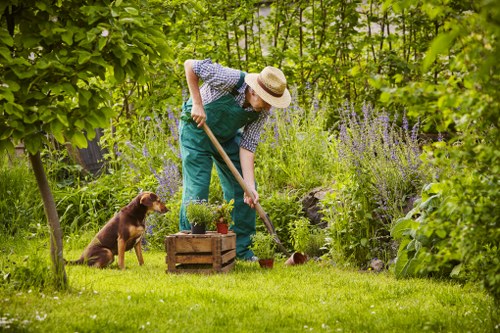 To encourage public understanding and participation, we publish simple site signage that mirrors borough recycling language — such as separate bins for organics, dry recyclables and residual waste — making Gardening Barnes' eco disposal areas intuitive for volunteers and members of the public. Clear signage helps reduce contamination and increases the yield of recyclable materials.
Monitoring and reporting are built into every project. We track weight by stream, contamination rates, and the onward destinations of materials. Quarterly reports assess progress against our recycling percentage target and inform continuous improvements in our sustainable rubbish gardening area management. Transparency helps build trust and creates measurable steps toward carbon and waste reduction.
Finally, Gardening Barnes invests in training and simple on-site systems — from compost bays and wormeries to secure dry stores for salvage — so that each site becomes a model of a small-scale circular economy. By combining local transfer station partnerships, charity reuse networks, and a modern low-emission van fleet, we aim to deliver a resilient, resource-efficient way of managing garden waste that benefits people and the planet.